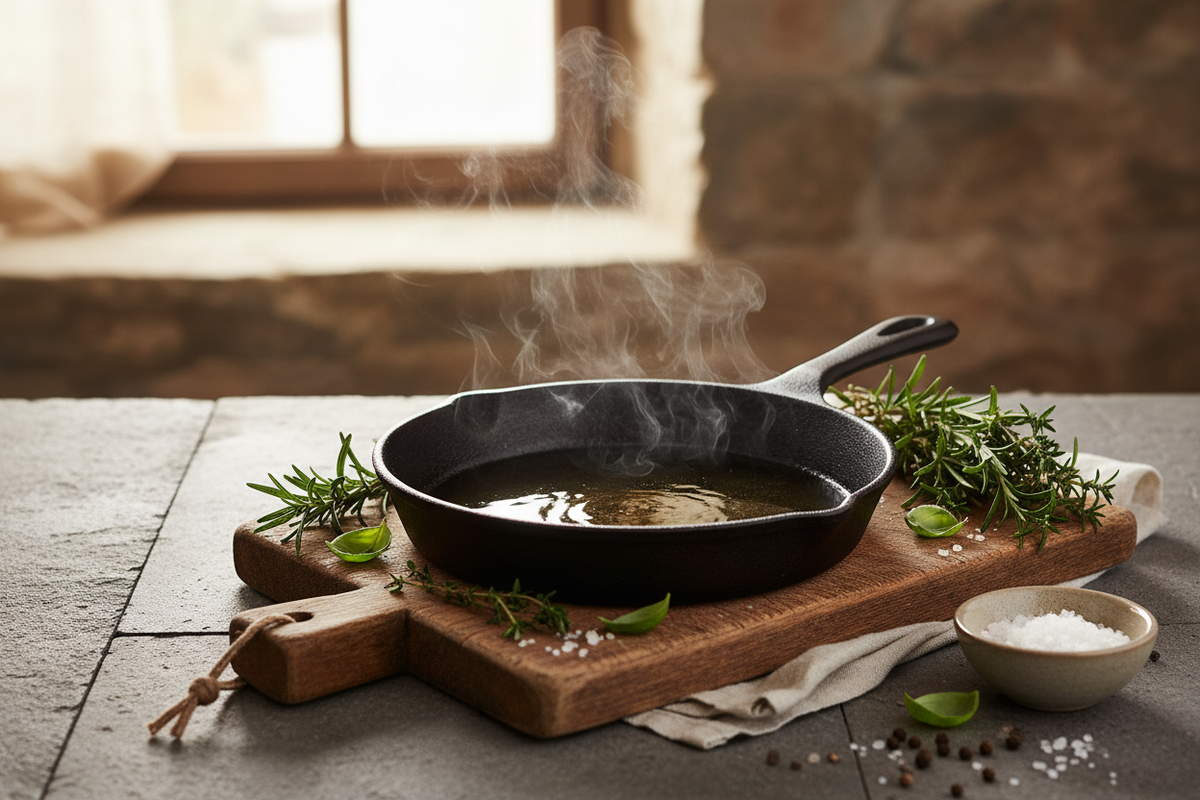
How to Cook with Extra Virgin Olive Oil — And Why Finishing Is Where Your Spend Really Counts
Extra virgin olive oil is not just the healthiest cooking fat available — it is the most flavorful. But how you use it determines how much of that flavor and nutrition you actually get. There's a hierarchy to it: finishing raw at the table, light frying in the pan, and everything in between. Understanding the difference will change how you cook permanently.
EVOO Is King — In Flavor and in Health
Let's get this out of the way first. Extra virgin olive oil is the only widely available cooking fat that is simultaneously high in monounsaturated fats, rich in polyphenols (natural antioxidants), and genuinely delicious raw. Butter is flavorful but saturated. Vegetable and seed oils are neutral at best, inflammatory at worst. EVOO does what none of them can: it makes food taste better and it is measurably better for you.
The polyphenols in high-quality EVOO are linked to reduced inflammation, cardiovascular protection, and long-term metabolic health. And unlike most health foods, it doesn't require any sacrifice. The thing that's good for you also happens to be the thing that makes your food taste extraordinary.
Cooking with EVOO — Yes, You Can, and You Should
One of the most persistent myths in the kitchen is that you shouldn't cook with extra virgin olive oil because "the heat destroys it." This is largely incorrect — and it's costing people flavor.
EVOO has a smoke point of around 375–405°F (190–207°C), which is more than adequate for most everyday cooking including sautéing, roasting, and light frying. More importantly, research has shown that EVOO is actually more stable under heat than many refined seed oils, precisely because of its polyphenol content. The antioxidants protect the fat from oxidation.
When you cook with EVOO — sautéing aromatics, frying eggs, building the base of a sauce — the oil infuses into the food in a way that a neutral oil never can. A soffritto built in good EVOO tastes fundamentally different from one made in sunflower oil. The flavor becomes part of the dish rather than just a medium for cooking it.
Light Frying in EVOO — Underrated and Worth It
Shallow frying in extra virgin olive oil is one of the great underused techniques in home cooking. Fried eggs in EVOO develop crispy, lacy edges and a richness you cannot get any other way. Bread fried in EVOO becomes something else entirely. Vegetables crisped in a generous pour of EVOO at high heat caramelize with a depth and flavor that roasting alone doesn't achieve.
Yes, you go through more oil. That's the point. Light frying in EVOO is a deliberate flavor decision, and it pays off significantly. The heat coaxes the oil's aromatic compounds into the food directly, which is why fried-in-EVOO anything carries a character you simply cannot fake with a cheaper fat.
Finishing — Where Your Spend Goes the Furthest
If cooking with EVOO adds real flavor, finishing with it is where a premium oil justifies its price most completely. Oil added to a dish during cooking integrates and loses its individual character. Oil poured raw over food at the last moment before eating retains everything — the grassiness, the fruitiness, the peppery finish, the freshness.
This is the Italian way. A pour of Regios EVOO over a bowl of hot soup immediately before eating isn't a garnish — it's a final seasoning that transforms the dish. The heat from the food releases the oil's aromatic compounds without cooking them away. You get full flavor impact with a tablespoon or two.
The practical implication: if you're working with a premium EVOO and want to make the most of it, use it raw or as a finish. Use it over:
- Soups — 1–2 tablespoons poured over the surface just before eating. Bean soups, tomato, minestrone, pumpkin. The oil should pool visibly and be stirred in at the table.
- Grilled meat or fish — poured immediately off the heat while still piping hot. The residual heat does the work.
- Pasta — a final pour over each bowl before serving, in addition to whatever oil was used in cooking.
- Vegetables — roasted or steamed, finished with a generous drizzle and flaky salt.
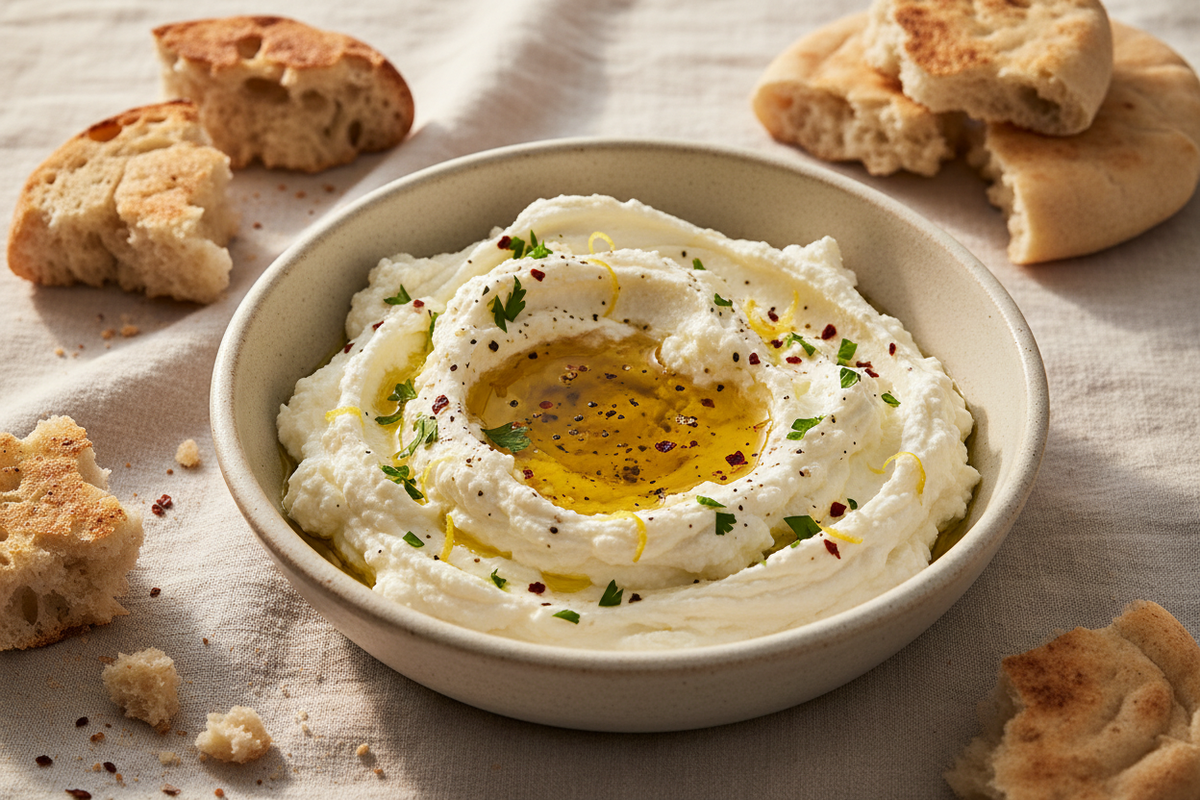
- Bread — poured into a shallow dish, eaten without apology.
- Ice cream — with flaky sea salt. Try it once.
The Rule of Thumb
Cook with good EVOO. Finish with your best EVOO. The flavor compounds most sensitive to heat — the ones that make a premium oil worth the price — are best experienced raw. But don't let that stop you from frying your eggs in it too. EVOO is stable, flavorful, and healthy at every stage of cooking. It is, genuinely, the only oil worth having in your kitchen.
Written by Raphael Bondi — Raphael has spent several years in the extra virgin olive oil business, sourcing single-origin oils direct from estate producers across the Mediterranean and beyond. His focus is on harvest-fresh EVOOs with verified polyphenol content and genuine provenance.
Shop our full range of single-origin extra virgin olive oils →

Written by Raphael Bondi


Leave a comment
This site is protected by hCaptcha and the hCaptcha Privacy Policy and Terms of Service apply.