Article: Italy’s October Olive Harvest: Why Early-Harvest Oils Stand Out

Italy’s October Olive Harvest: Why Early-Harvest Oils Stand Out
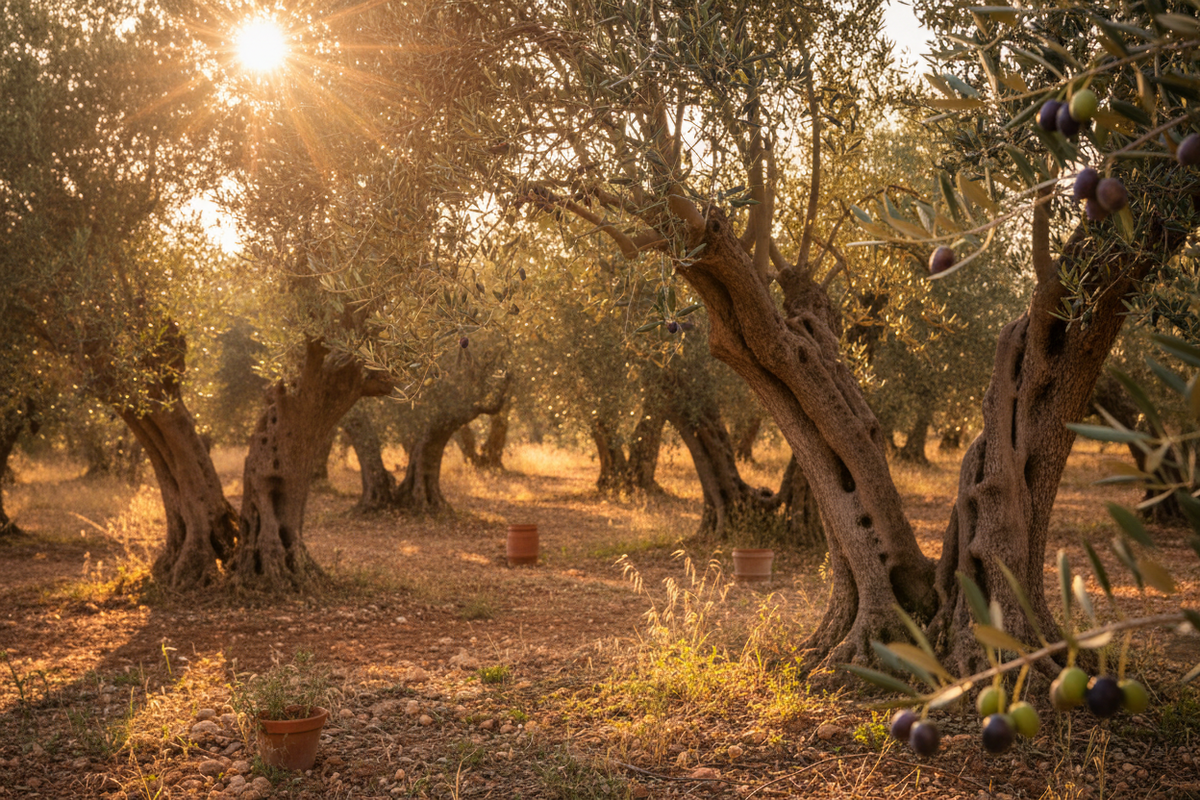
October brings a particular excitement to Italy’s olive groves. The olive harvest is getting underway, mills are preparing for a busy season, and the first early-harvest extra virgin olive oils are beginning their journey from fruit to bottle.
For us at The Olive Trading Co., this is a season of anticipation. We look forward to discovering the aromas, flavors, and individual character of the new harvest, especially those vivid early oils that make a simple finishing drizzle feel like an occasion.
When does the olive harvest begin in Italy?
Italy’s olive harvest does not begin on one fixed date. Timing varies by region, cultivar, altitude, weather, and the style of oil a producer wants to make. Some growers start early, while others wait for their fruit to develop further.
In the seasonal picture we’re watching, harvesting begins to gather momentum around mid-October, roughly October 15. Think of that as a useful point of anticipation rather than a nationwide deadline. Each grove has its own rhythm, and the condition of the olives matters more than the calendar.
That variation is part of what makes Italian olive oil so interesting. A new harvest is not one uniform flavor arriving all at once. It is a succession of oils shaped by different varieties, places, and decisions in the grove and mill.
What is early-harvest olive oil?
Early-harvest olive oil is made from olives picked relatively early in their ripening cycle. The fruit may still be green or just beginning to change color, rather than fully ripe.
The term describes a harvesting choice, not a separate quality grade. An early-harvest oil still needs to meet the requirements for extra virgin olive oil to be called extra virgin. Nor does the wording tell you exactly how an oil will taste: cultivar, growing conditions, and milling all contribute to its character.
What draws us to these oils is their potential for freshness and aromatic intensity. At their best, they capture a vivid expression of the fruit and give food a distinct finishing touch.
Why do early-picked olives yield less oil?
Olives picked earlier generally give a lower oil yield than fruit harvested later in the ripening cycle. The precise difference depends on the variety and season, but the trade-off matters to growers: a smaller yield can mean more olives and more work for each liter produced.
Choosing to harvest early is therefore deliberate. A producer may accept less oil in pursuit of a particular flavor profile, rather than waiting simply to obtain a larger quantity.
Lower yield alone does not prove higher quality. It explains part of the work and decision-making behind an early-harvest oil, but the finished oil must still be judged on its own merits.
What does early-harvest olive oil taste like?
A carefully made early-harvest oil can be wonderfully fragrant. Depending on the cultivar and conditions, its aromas might suggest freshly cut grass, green herbs, artichoke, or tomato leaf. These are examples of tasting notes, not a checklist every bottle must satisfy.
On the palate, some early oils bring a pronounced green character, a pleasing bitterness, and a peppery finish. Others are more restrained. Intensity is not the only measure of quality, and the right oil for you is also the one that suits your food and your preferences.
We find it helpful to taste an oil with something simple as well as on its own. Warm bread, plain beans, or a cooked vegetable can make its character easier to understand. The point is not to find the most impressive vocabulary. It is to notice what the oil adds.
Is early-harvest olive oil always better?
No. Early picking creates the potential for outstanding oil, but it is not a guarantee of superiority. Healthy olives, careful harvesting, prompt milling, and appropriate storage are essential parts of the result.
A beautifully made oil from riper fruit can also be excellent, often with a different style that works well at the table. Likewise, an oil labeled early harvest should not be chosen on those words alone.
Our excitement is about the complete picture: good fruit, thoughtful production, and an oil whose aroma and flavor make us want to use it. The timing matters, but so does everything that happens after the olives leave the tree.
How to use a fragrant new-harvest olive oil
One of the easiest ways to appreciate a vibrant oil is to add it just before serving. A finishing drizzle lets its aroma become part of your first impression of the dish.
Try it over warm white beans with herbs, roasted squash, grilled vegetables, or a bowl of soup. A little oil over a simple tomato salad or warm bread can also be a satisfying way to explore its flavor.
A more assertive oil may provide a welcome contrast to creamy or earthy foods. A gentler oil may suit dishes where you want a subtler addition. There is no need to reserve a good bottle for elaborate cooking; simple food often gives it room to shine.
Olive oil is not only a cooking ingredient. It is also a seasoning, dressing, and finishing touch. Thinking of it that way makes choosing an oil more personal: what flavor do you want to bring to the meal?
Questions about Italy’s October olive harvest
Does every Italian producer start harvesting on October 15?
No. Mid-October is a useful seasonal reference, not a universal starting date. Growers choose their timing according to their location, variety, fruit condition, and intended oil style.
Does green color mean an olive oil is better?
Color alone is not a reliable way to judge quality. Focus instead on the oil’s aroma, flavor, production information, and how it has been stored.
Are all early-harvest oils strongly peppery?
No. Their character varies. Some are bold and peppery, while others are more delicate. Early harvest does not promise one specific flavor or a particular laboratory measurement.
Should I wait for Italian oil before enjoying a fresh harvest?
Not necessarily. The Northern and Southern Hemispheres follow different harvest seasons. While we anticipate Italy’s new oils, our Chilean selections offer another harvest to explore.
A season worth following
As Italy’s October olive harvest gathers pace, we’re looking forward to discovering what the new season brings. We’ll share more about our selections as the harvest unfolds, without promising arrival dates before they are confirmed.
In the meantime, explore our Chilean olive oils or discover Alonso 2026 Coratina. There is plenty to enjoy while we wait for the next chapter of the European harvest.
Leave a comment
This site is protected by hCaptcha and the hCaptcha Privacy Policy and Terms of Service apply.