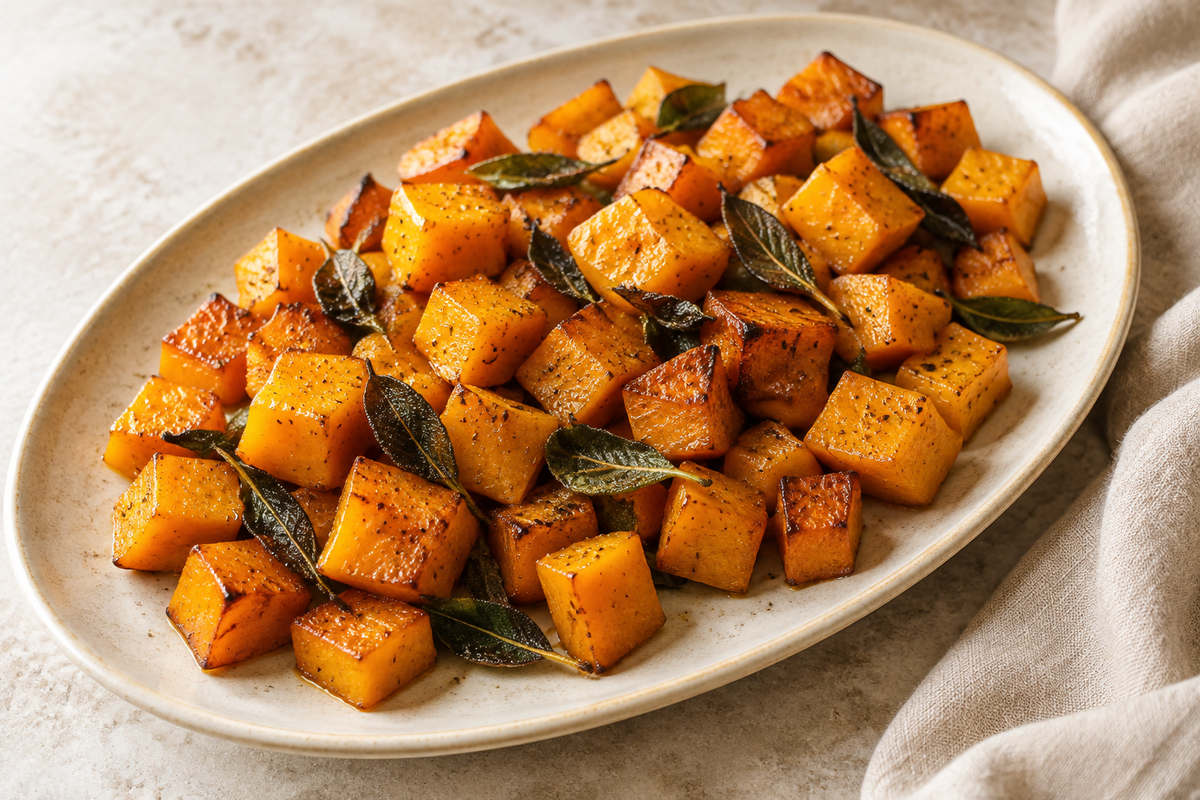
Easy Roasted Butternut Squash with Olive Oil and Sage
You do not need to be an experienced cook to make something delicious. This roasted butternut squash is a good place to start: a handful of ingredients, one baking tray, and an oven that does most of the work.
The squash turns tender and sweet, the edges become golden, and a little sage brings an autumn flavor. Finish with a drizzle of extra virgin olive oil, and you have a simple side dish worth making again.
Short on time? Buy pre-cut squash. There is no prize for doing the peeling yourself.
The recipe at a glance
Serves: 4 as a side
Prep: about 10 minutes using pre-cut squash; allow longer for a whole squash
Cook: 30–40 minutes
What you need
- About 1½ pounds peeled, seeded butternut squash, cut into 1-inch cubes
- 2 tablespoons extra virgin olive oil, plus a little more to finish
- ½ teaspoon fine salt, or to taste
- Freshly ground black pepper
- 6–8 fresh sage leaves, roughly torn, or ½ teaspoon dried sage
How to make it
- Heat the oven to 425°F. Use a large baking tray so the squash has room to spread out.
- Toss everything together. Put the squash on the tray, add the olive oil, salt, pepper, and sage, and toss until lightly coated. Spread into a single layer, leaving a little space between the pieces.
- Roast for 30–40 minutes. Turn the pieces after about 20 minutes. They are ready when a fork slides in easily and the edges are golden. Ovens vary, so trust those signs more than the clock.
- Finish and serve. Let the squash cool for a minute or two, then add a small drizzle of extra virgin olive oil. Taste and add a pinch more salt if needed.
The one trick that makes a difference
Do not crowd the tray. Space helps the squash roast rather than steam. If your tray looks packed, use two. That is the main trick, not a special tool or complicated technique.
And do not worry if every piece is not perfectly even or crisp. Tender squash with golden edges is the goal. This is dinner, not a cooking exam.
Why add olive oil at the end?
The oil you roast with helps coat the squash and carries flavor through the dish. The final drizzle does something different: it adds fresh aroma and flavor after the heat. Olive oil is not just a cooking ingredient. It can be the final seasoning, too.
For a little more on this simple approach, read our guide to cooking and finishing with extra virgin olive oil.
For this recipe, try Alonso Arbequina 2026. This delicate, fruity Chilean extra virgin olive oil is a lovely match for roasted vegetables. Start with a little, taste, and add more if you like.
Make it your own
No sage? Use a little thyme, or leave the herbs out. Want a brighter finish? Add a small squeeze of lemon at the table. Serve alongside roast chicken, spoon over warm lentils, or enjoy with bread and a simple salad.
You can make this yourself. Start with pre-cut squash if that makes life easier, give it room on the tray, and let the oven do the rest.

Written by Raphael Bondi

Leave a comment
This site is protected by hCaptcha and the hCaptcha Privacy Policy and Terms of Service apply.