Coratina vs. Arbequina: Which Olive Oil Fits Your Taste?
Choosing between Coratina and Arbequina olive oil is less about finding a winner and more about deciding what you want your food to taste like. Both can make excellent extra virgin olive oil, but they often bring very different personalities to the table.
The quick answer: Coratina generally suits people who enjoy a robust, bitter, peppery oil with a pronounced green character. Arbequina often suits people who prefer a gentler, fruitier oil that complements food without taking over. Neither name guarantees a particular flavor: the producer, harvest, ripeness of the olives, and condition of the bottle all matter.
Here is how to choose between them, how to pair each with food, and why keeping both in your kitchen can be more useful than declaring one the best.
What are Coratina and Arbequina?
Coratina and Arbequina are olive varieties, also called cultivars. Think of the variety as one part of an oil's identity, not its entire résumé. It helps explain the kind of flavor you might expect, but it cannot tell you everything about quality or freshness.
Coratina is associated with Puglia in southern Italy, while Arbequina has its roots in Spain. Both are also grown outside their places of origin. A Coratina oil does not have to come from Italy, and an Arbequina oil does not have to come from Spain.
Our Alonso Coratina and Alonso Arbequina, for example, come from Chile's O'Higgins region. Comparing two varieties from the same producer is a helpful starting point: you can explore the difference in character without assuming that a country's name explains everything in the bottle.
Coratina vs. Arbequina: the main flavor difference
Coratina: bold, green, and peppery
Coratina is commonly associated with a more assertive style. You may notice green, leafy aromas, a distinct bitterness on the tongue, and a peppery sensation toward the back of the throat. These qualities can give simple food real definition.
Our Alonso Coratina 2026 is described with notes of freshly cut grass, arugula, and chicory, followed by an intense, lingering spice. That makes it an appealing choice when you want the oil to be part of the dish's flavor, rather than simply its background.
If you enjoy bitter greens, strongly flavored vegetables, or a lively finishing drizzle, Coratina is a natural place to start. If you find a powerful oil overwhelming on its own, try it on food before ruling it out.
Arbequina: gentler, fruity, and versatile
Arbequina often takes a softer approach. Compared with a robust Coratina, it can feel more delicate and fruit-forward, making it approachable for someone who is beginning to explore premium extra virgin olive oil.
Our Alonso Arbequina 2026 has a fruity aroma of apple, fresh grass, and herbs. Its lighter character makes it useful for dipping, dressing salads, and finishing pasta, roasted vegetables, or fresh cheese.
Gentle does not mean flavorless, and it does not mean inferior. A delicate oil can bring balance to a dish where a much more assertive oil would compete with the ingredients. Arbequina can still have bitterness and pepperiness; the variety name is not a promise that every bottle will taste mild.
Is bitter or peppery olive oil a bad thing?
Not necessarily. Bitterness and pepperiness can be welcome characteristics of extra virgin olive oil. They are different from the stale, tired impression of an oil that is no longer in good condition.
The important question at the table is balance. A robust oil may feel intense when tasted alone, then make perfect sense over warm beans, grilled meat, or a slice of ripe tomato. Food changes how you experience the oil.
You also do not need to enjoy the strongest possible oil to appreciate quality. Choosing a delicate Arbequina because it suits your palate is a sensible preference, not a compromise. The goal is an oil you enjoy using, not one you feel obliged to admire.
What foods pair well with Coratina olive oil?
Coratina works especially well when the dish can carry a confident finishing oil. Its green character, bitterness, and peppery finish can provide contrast to rich or earthy ingredients.
Grilled meat and roasted chicken
Try a small drizzle over sliced steak, lamb, or roasted chicken just before serving. Start lightly, taste, and add more if the dish needs it. The oil should bring another layer of flavor, not hide the cooking.
Beans, lentils, and substantial soups
A bowl of warm beans or lentils is an excellent place to explore a robust oil. Add it at the table, where its aroma can stand out. A squeeze of lemon or a little vinegar can complete the dish without a complicated sauce.
Tomatoes, toast, and roasted vegetables
Good bread, ripe tomatoes, and a pinch of salt give Coratina room to speak. Roasted cauliflower, potatoes, or other substantial vegetables also make an approachable pairing. You do not need an elaborate recipe to appreciate a distinctive oil.
What foods pair well with Arbequina olive oil?
Arbequina is useful when you want the oil to tie a dish together gently. Its fruitier profile can make it an easy everyday choice, especially for lighter meals.
Salads and simple dressings
Use Arbequina in a dressing when you want the leaves, herbs, and other ingredients to remain the focus. Taste the dressing with a piece of the actual salad, rather than judging it only from a spoon.
Fresh cheese and vegetable dishes
A drizzle over fresh cheese can add aroma and richness without overwhelming its delicate flavor. Try it over roasted vegetables, too, particularly when the dish already has a gentle sweetness.
Pasta and bread dipping
For a simple pasta finish, add Arbequina after cooking and toss before serving. For bread dipping, begin with the oil alone. Adding lots of seasoning immediately can make it harder to notice what the oil itself brings.
Can you cook with Coratina and Arbequina?
Yes. Both varieties can produce extra virgin olive oils suited to everyday cooking. The choice is usually about the flavor you want and how you prefer to use a premium bottle, rather than a rule that one variety is only for cooking and the other is only for finishing.
Heating changes an oil's delicate aromas. If you bought a bottle specifically for its distinctive character, using some of it off the heat often gives you the clearest experience of that flavor. You can cook with EVOO and still reserve a final drizzle for serving.
For our kitchen, olive oil is not just a cooking ingredient. It is also a seasoning, a dressing, and a finishing touch. That last spoonful can be the difference between food that tastes complete and food that still needs something.
How to compare the two at home
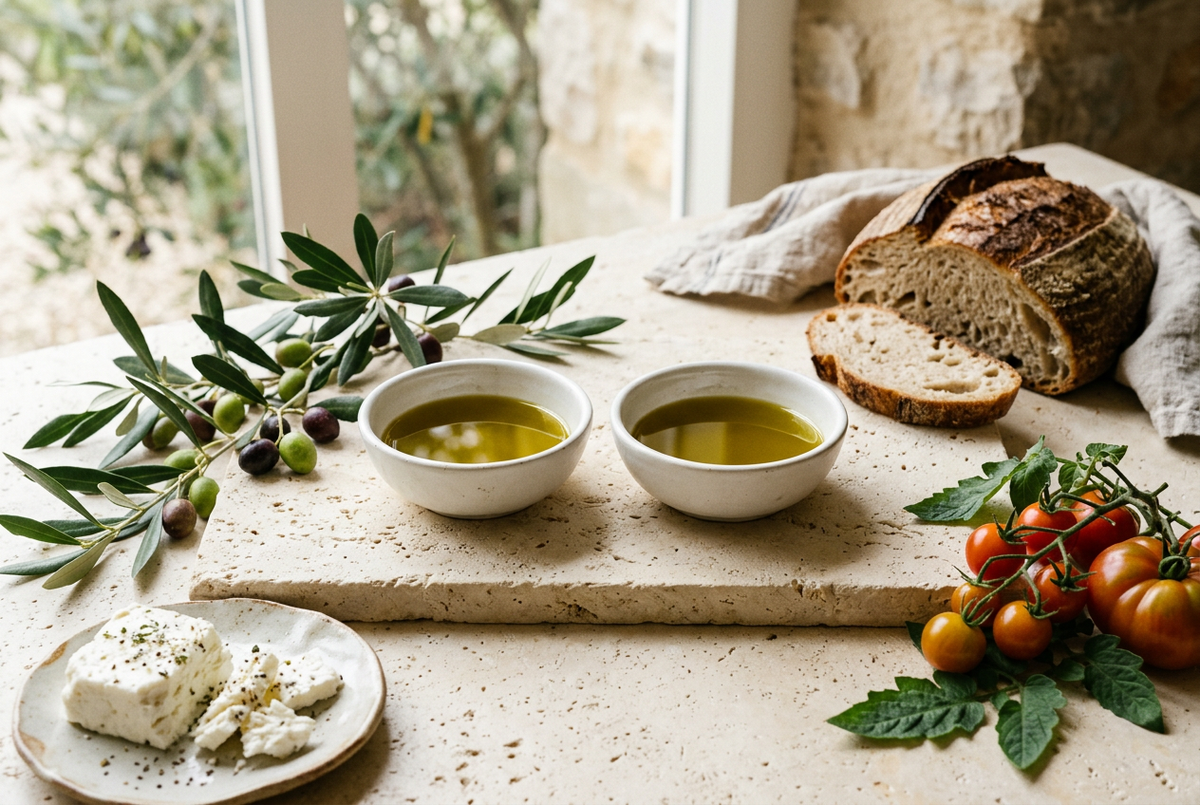
You do not need to become a professional taster to learn which style you prefer. Put a little of each oil into separate small dishes and smell them first. Taste a small amount, then compare them again on the same food.
Warm beans, plain bread, or simply prepared vegetables make useful starting points. Keep the salt and other seasonings consistent so you are comparing the oils, not two different recipes.
Notice three things: the aroma, how pronounced the bitterness feels, and the peppery finish. Then ask a more practical question: which version of the food would you want another bite of?
Your answer may change with the meal. You might prefer Arbequina on a delicate salad and Coratina on dinner's beans. That is exactly why variety can be useful in the kitchen.
Which olive oil should you buy?
Choose Coratina if you want a bolder green flavor, enjoy bitterness and pepperiness, and often finish substantial dishes with olive oil.
Choose Arbequina if you want a gentler, fruity profile for salads, fresh cheese, dipping, and meals where you prefer the oil to support the other ingredients.
Beyond variety, pay attention to the producer, harvest information, and how you will store and use the bottle. A cultivar name alone cannot establish quality, and flavor intensity alone cannot establish freshness.
If you are building a small olive oil collection, these two styles make a useful pair. Explore Alonso Coratina for a robust finish and Alonso Arbequina for a lighter, versatile option. Let the food, and your own taste, decide which bottle you reach for.
Frequently asked questions
Is Coratina stronger than Arbequina?
Coratina commonly produces a more robust, bitter, peppery style, while Arbequina is often gentler and fruitier. Individual bottles vary with growing conditions, harvest decisions, production, and storage.
Is Arbequina good for someone new to extra virgin olive oil?
A delicate Arbequina can be an approachable starting point. Taste it on food as well as on its own, and do not assume you must move toward stronger oils to develop your palate.
Is Coratina always better quality?
No. Variety and quality are different questions. An excellent Arbequina is not less valuable because its flavor is gentler, and a powerful Coratina is not automatically better because it tastes intense.
Do I need both varieties?
No, but they give you different options. Start with the style that fits the meals you cook most often. Add the other when you want to explore how a different finishing oil changes the same food.

Written by Raphael Bondi

Leave a comment
This site is protected by hCaptcha and the hCaptcha Privacy Policy and Terms of Service apply.